


Farm Fresh Pick of the Week: Artichokes
Friday, February 10, 2012 17:00How to Choose, Prepare, and Drink Them!
by: Casey Pukl
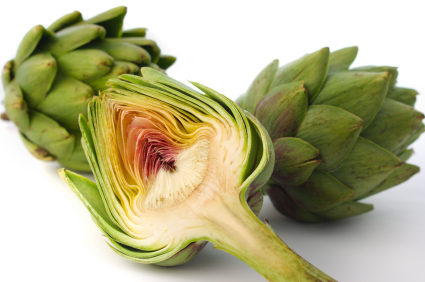 I used to buy artichokes at the grocery store all the time. My mother used to use artichoke hearts in salads all the time, and my friend’s parents used to make them for dinner. I knew I liked them, and I knew there was a way to make them taste good.
However, I had absolutely no idea what to do with a raw artichoke. I didn’t know how to choose good ones, prepare them, or hell, even where to store them! Thankfully for me, I now work at Anthology, where our kitchen was more than happy to oblige when I asked what to do!
When choosing artichokes, Sous-Chef Kristen Williams recommends looking for ones that have solid, bold coloring. This indicates an artichoke with stronger flavor and higher nutrient content. The leaves should be tight— they should not look like they’re blooming.
The most traditional and simplest way to prepare an artichoke can be done in a few simple, but somewhat time-consuming steps:
1- Using kitchen shears, snip the thorns off the ends of each leaf from the base to the top third to quarter of the artichoke.
2- Using a sharp or serrated knife, cut off the top third to quarter of the artichoke and as much of the bottom necessary to leave about an inch of the stem (If you have several artichokes, after this step put the artichoke in acidulated, lemon or vinegar, water until they’re all trimmed).
3- Simmer the artichokes in salted water or broth until the base is fork-tender.
Artichokes are eaten by pulling off the leaves and dipping the base into any dip of your choice (aioli or mayo are most common) and scraping the soft, edible portion at the bottom of the leaf off between your teeth, discarding the rest of the leaf. Once you get to the heart, scrape off the ‘choke. The heart and most of the stem are edible.
Kristen decided to demonstrate four preparations of this unique and flavorful vegetable along side two different aiolis for dipping! The first was a roasted red pepper aioli, while the second was a charred scallion aioli. (See absolutely gorgeous plated photo, courtesy of Sous-Chef, Kristen Williams)
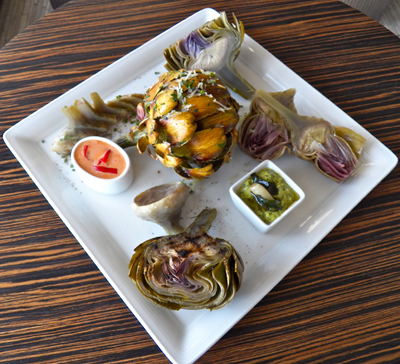 Whole Fried
This is a very rustic Italian preparation. To make these, trim your artichokes as outlined above. Use a pot or deep fryer to heat up your oil. Carefully insert the artichoke into the oil, and turn regularly. Once evenly golden brown, remove and drain on a paper towel. Season with a little salt, pepper, grated parmesan, and parsley.
Poached
To poach your artichokes, trim them again as outlined, and the cut them in half. Simmer them in either water with lemon, or a vegetable broth until they are fork-tender.
Poached and Grilled
Poach them as outlined above, and then grill the halves flat side down. This gives them a little extra flavor and crispness that is absolutely divine.
Confit
Now this is the mack daddy of all artichoke preparations. Confit is the technical term for a certain type of preparation in which food has been immersed in a substance for flavor or preservation. With meats, this generally means cooked in their own fats, whereas candied fruits are actually considered confit. With artichokes, Kristen chose to confit them in garlic oil (insert trip to heaven here). To start this process, she cooked garlic in oil (you can use any kind of oil— olive, vegetable, etc) at 300 degrees for about 10 minutes. She then allowed the oil to cool to 175 degrees, threw in the artichokes, and let them cook until tender.
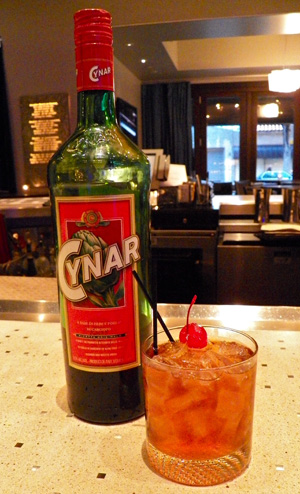
Cocktails: Believe it or not, we do have a cocktail section for this farm fresh pick! It just so happens that there exists an artichoke liqueur— and it’s pretty darn good!
Cynar (pronounced Chin + R) is an artichoke based bitter liqueur that is considered a digestive. In Italy, this versatile spirit is used as an after dinner drink, where as in Brazil and the USA, it’s used mostly in mixed cocktails. The French use it to spike their beer!
This artichoke-based bitter is enhanced by a blend of 13 herbs and spices. The end result is a very rich flavor. Personally, I equate it to a very earthy dark chocolate with a bitter finish. While some (myself included) enjoy Cynar on the rocks, here are a few classic uses for this unique liqueur.
‘Cin Cyn’ Negroni Variation
1oz Gin
1oz Cynar
1oz Sweet Vermouth
Instructions: Combine all ingredients, add ice, stir or shake, and either strain and serve up or on the rocks.
Ah, the Negroni. Traditionally, this classic cocktail was made with one part gin, one part sweet vermouth, and one part bitters (traditionally Campari is used). This substitution is simple, yet creates a completely different drink. Instead of the slightly tart and fruity notes in the Campari, this drink takes on an earthier flavor and velvety texture. While it still holds the core bitterness of the Negroni, it’s a softer side. Beverage manager Marc Canzoneri recommends making this with Martini Rosato Vermouth if you desire a bit more sweetness.

Cynar Flip
1 whole egg
½ oz cream
½ oz Simple Syrup
1 ½ oz Cynar
Instructions: Combine all ingredients and mime shake (shake without ice) until frothy. Add ice, shake again, strain. Garnish with nutmeg.
I know what you’re thinking. Raw egg, seriously? Seriously. Flips have been around since the 1800’s, and there’s reason we still make them. They’re delicious! And don’t worry about the safety of eating them this way. Remember, you’re shaking them with alcohol, which will kill anything you might be worried about. Now the more fun question; why does this drink work? It’s like an adult dessert. It’s slightly sweet, rich, but still has that bitterness that keeps it interesting. A very important point in this recipe is the mime shake— this is sometimes called “dry shaking” or “pre-shaking”. This step helps to emulsify the eggs and whip the air into them. Pro-tip: Don’t add too much nutmeg, or you’ll be in for a super dry, incredibly bitter experience.